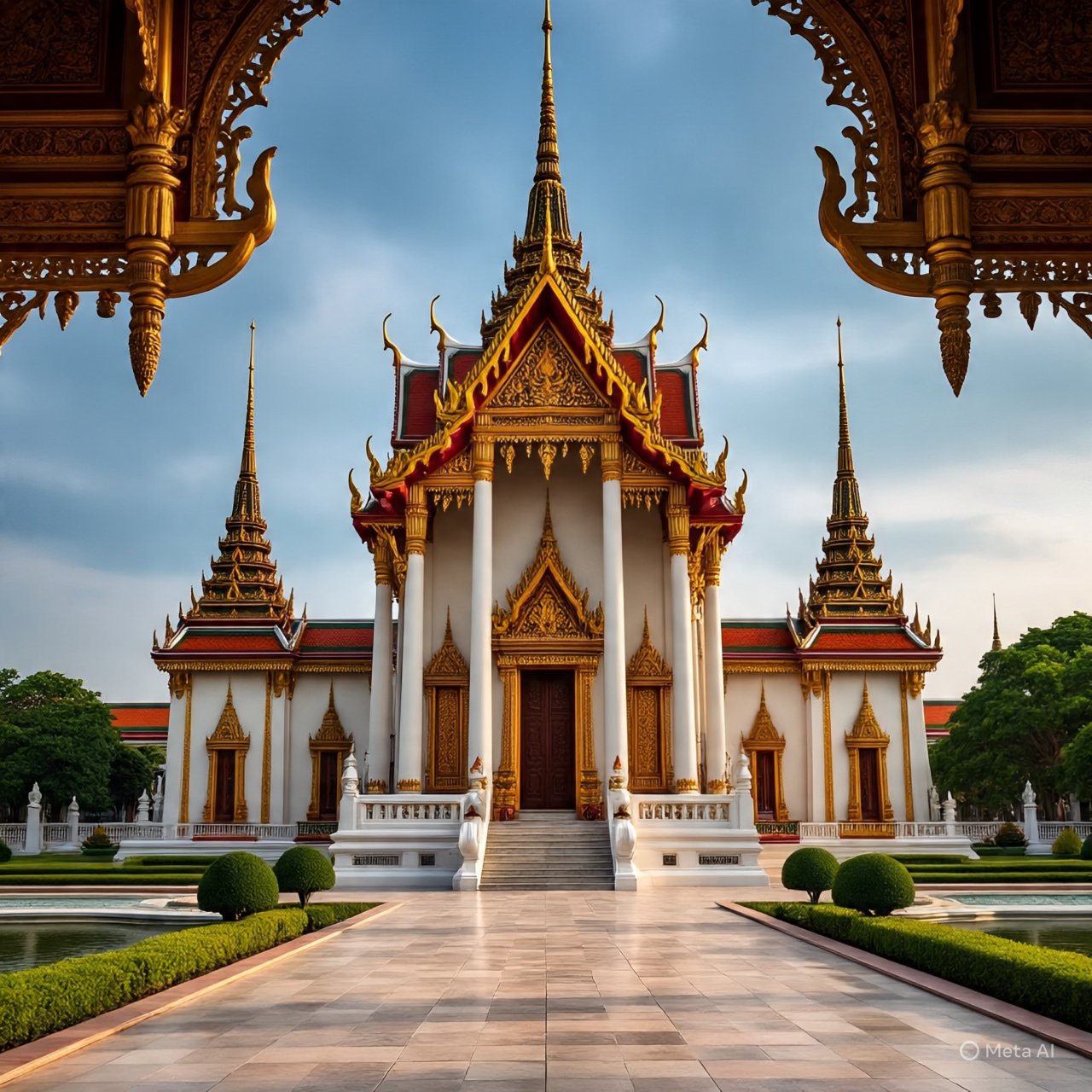
Bangkok is a city of contrasts modern skyscrapers rise beside ancient temples, bustling street markets thrive next to luxury malls, and the hum of tuk‑tuks mixes with the chants of monks. At the center of this vibrant capital lies the Grand Palace, Thailand’s most iconic landmark and a symbol of national pride.
Built in 1782, the Grand Palace served as the official residence of the Thai kings for over 150 years. It is not just a palace but a sprawling complex of halls, courtyards, gardens, and temples that reflect centuries of craftsmanship and devotion. Today, it remains the spiritual heart of Thailand, attracting millions of visitors each year.
Walking through the palace grounds feels like stepping into another world. Golden spires glisten in the sunlight, intricate mosaics shimmer with color, and statues of mythical creatures guard sacred halls. The highlight is Wat Phra Kaew, the Temple of the Emerald Buddha, considered the most revered religious site in Thailand.
The Grand Palace is more than a tourist attraction; it is a living symbol of Thai heritage. Every building tells a story, every mural carries meaning, and every ceremony reflects traditions that have shaped the nation.
History and Heritage
Founding of the Palace
The Grand Palace was commissioned by King Rama I, the founder of the Chakri Dynasty, when he moved the capital from Thonburi to Bangkok in 1782. He envisioned a palace that would not only serve as his residence but also as the administrative and spiritual center of the kingdom.
The location was strategic — on the banks of the Chao Phraya River, offering both defense and access to trade routes. The palace was initially built with wood and later expanded with brick and stone, evolving into the grand complex we see today.
Architectural Evolution
Over the centuries, successive kings added new buildings, halls, and temples. Each reflected the artistic styles of its era, blending Thai, Khmer, and European influences. The result is a mosaic of architecture from traditional Thai roofs with gilded finials to neoclassical halls inspired by Western design.
The palace is divided into four main courts:
Outer Court: Administrative offices and public buildings.
Middle Court: Throne halls and ceremonial spaces.
Inner Court: The royal residence, traditionally reserved for the king and his family.
Temple of the Emerald Buddha: The spiritual heart of the complex.
Wat Phra Kaew – The Emerald Buddha
The Temple of the Emerald Buddha is the most sacred site within the Grand Palace. The statue, carved from a single piece of jade, is believed to date back to the 15th century. It has traveled across Southeast Asia before being enshrined in Bangkok.
The Emerald Buddha is dressed in seasonal robes, changed three times a year by the king himself a ritual that marks the changing of the seasons and symbolizes prosperity.
Role in Thai History
The Grand Palace has witnessed centuries of Thai history coronations, royal ceremonies, political events, and cultural milestones. It has survived wars, modernization, and social change, remaining a constant symbol of unity and identity.
Even today, the palace is used for important state functions, including royal ceremonies and religious festivals.
Architecture and Symbolism
The Grand Palace is a masterpiece of design. Its architecture reflects not only aesthetic beauty but also deep symbolism. The spires represent Mount Meru, the center of the universe in Hindu and Buddhist cosmology. The murals depict stories from the Ramayana, blending mythology with moral lessons.
Every detail from gilded rooftops to guardian statues carries meaning. The palace is a physical manifestation of Thai identity, blending spirituality, monarchy, and artistry.
Culture and Visitor Experience
Visiting the Grand Palace is more than sightseeing; it is a cultural immersion. The palace grounds are alive with rituals, ceremonies, and traditions. Monks chant in temples, locals pay respects to the Emerald Buddha, and guides share stories of kings and dynasties.
For visitors, the experience is awe‑inspiring. The sheer scale of the complex, the brilliance of its colors, and the richness of its history make it unforgettable. Practical tips include dressing modestly (long pants and sleeves are required), arriving early to avoid crowds, and hiring a guide to fully appreciate the stories behind the architecture.
Festivals and Ceremonies
The Grand Palace hosts major national events:
Coronations of Kings
Royal funerals and weddings
Religious festivals like Songkran and Buddhist Lent
These ceremonies highlight the palace’s role as both a royal and spiritual center.
Travel Tips
Best Time to Visit: November–February for cooler weather.
Opening Hours: typically 8:30 AM – 3:30 PM.
Dress Code: Strict — modest clothing required.
Guides: Available at the entrance; highly recommended.
Conclusion
The Grand Palace is not just a monument; it is the soul of Thailand. It embodies the nation’s history, culture, and spirituality. Whether you are admiring the Emerald Buddha, exploring throne halls, or simply walking through golden courtyards, the palace offers an experience that connects you to centuries of tradition.
💬 Comments
No comments yet.