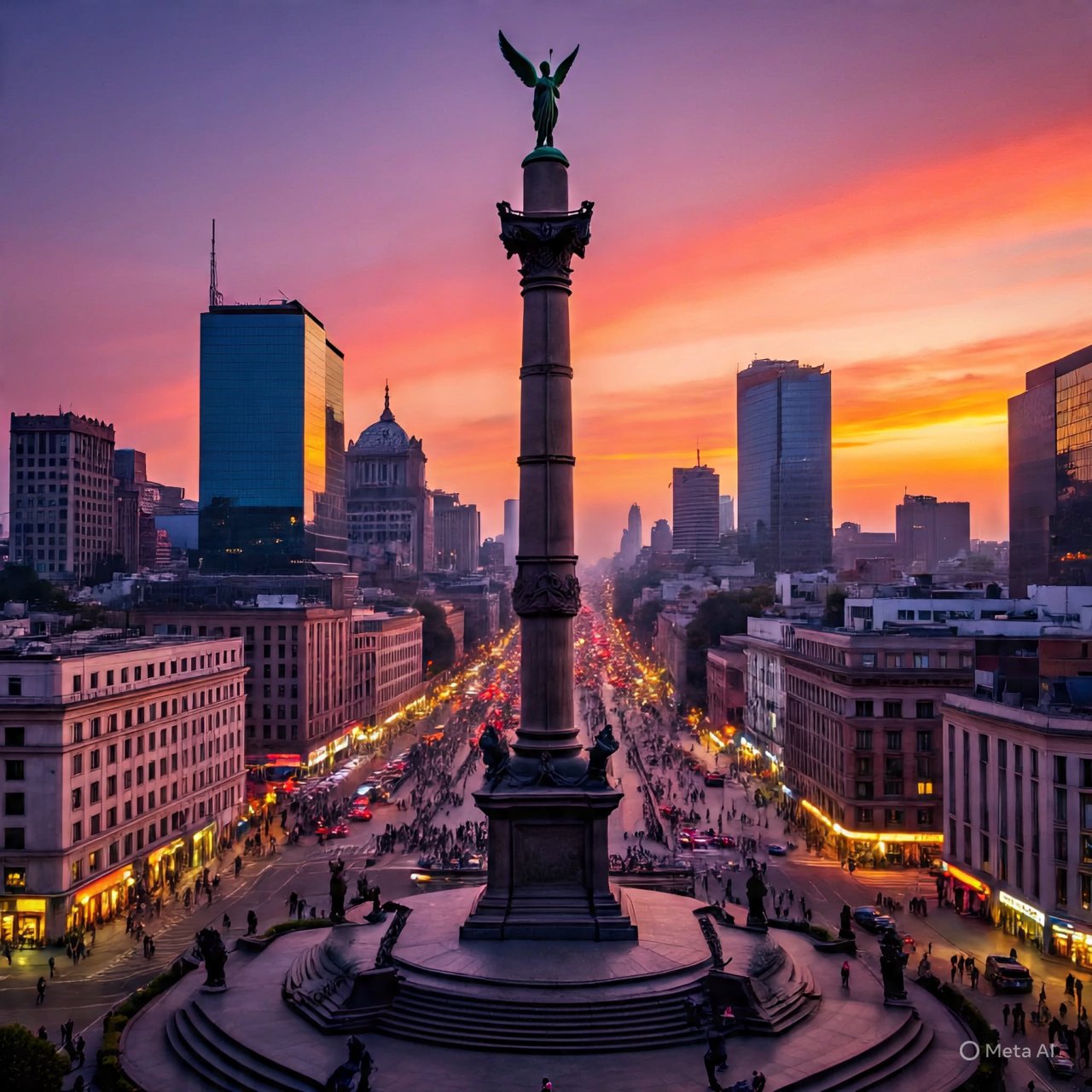
Mexico City is not just the capital of Mexico; it is the beating heart of the nation. With a population of over 20 million in the metropolitan area, it is one of the largest cities in the world. Yet despite its size, Mexico City feels intimate in its neighborhoods, alive in its plazas, and deeply rooted in its traditions.
This city is a paradox _ ancient ruins stand beside skyscrapers, traditional markets thrive next to luxury malls, and colonial churches share space with modern art museums. To visit Mexico City is to experience the full spectrum of Mexican identity: history, culture, food, art, and the unstoppable energy of urban life.
A walk through history
Mexico City is built on the ruins of Tenochtitlán, the capital of the Aztec Empire. Walking through the historic center, you can feel the layers of history beneath your feet.
Zocalo (Plaza de la Constitución) – One of the largest public squares in the world, surrounded by the Metropolitan Cathedral and the National Palace.
Templo mayor – The remains of the Aztec temple, discovered beneath the city streets, remind visitors of the city’s ancient roots.
Chapultepec castle – A hilltop fortress that has served as a royal residence, military academy, and museum.
Mexico City’s history is not confined to museums; it lives in the streets, the architecture, and the traditions that continue today.
Art and culture
Few cities in the world can rival Mexico City’s artistic spirit.
Museo Frida Kahlo (Casa Azul) – The former home of Frida Kahlo, filled with her paintings, personal belongings, and the atmosphere of her life.
Palacio de Bellas Artes – A stunning art nouveau building that hosts opera, ballet, and murals by Diego Rivera.
Museo Nacional de Antropología – One of the most important museums in Latin America, showcasing artifacts from Mexico’s pre‑Columbian civilizations.
Street art also thrives here, with murals and graffiti turning walls into canvases. Art is not just in galleries it is part of everyday life.
Food and gastronomy
Mexico City is a paradise for food lovers. From street tacos to fine dining, the city offers flavors that reflect its diversity.
Street Food – Tacos al pastor, tamales, and quesadillas sold by vendors on every corner.
Mercado de San Juan – A market famous for exotic meats, cheeses, and international delicacies.
Fine Dining – Restaurants like Pujol and Quintonil rank among the best in the world, offering modern takes on traditional Mexican cuisine.
Food in Mexico City is more than nourishment; it is culture, tradition, and innovation served on a plate.
Neighborhoods and local life
Mexico City is a collection of neighborhoods, each with its own personality.
Coyoacan – A bohemian district with cobblestone streets, colonial houses, and the Frida Kahlo Museum.
Roma and Condesa – Trendy areas filled with cafes, art galleries, and nightlife.
Polanco – Known for luxury shopping, fine dining, and modern architecture.
Xochimilco – Famous for its canals and colorful trajineras (boats), offering a glimpse into pre‑Hispanic traditions.
Exploring these neighborhoods reveals the diversity of lifestyles within the city.
Modern mexico city
While history and tradition are everywhere, Mexico City is also a modern metropolis.
Skyscrapers – The city skyline is dotted with towers like Torre Reforma and Torre Mayor.
Technology and Business – Mexico City is the financial and tech hub of the country.
Events and Festivals – From Day of the Dead parades to international film festivals, the city is always alive with activity.
Mexico City balances tradition with progress, making it a city of contrasts and possibilities.
Nature and green spaces
Despite its urban density, Mexico City offers green escapes.
Chapultepec Park – One of the largest city parks in the world, with lakes, museums, and walking trails.
Ajusco National Park – A mountainous area just outside the city, perfect for hiking.
Xochimilco Canals – A UNESCO World Heritage Site, preserving ancient waterways.
These spaces provide relief from the city’s hustle and bustle, reminding visitors of Mexico’s natural beauty.
Practical travel tips
Currency: Mexican Peso (MXN)
Language: Spanish, though English is common in tourist areas.
Transport: Metro system is extensive and affordable; Uber and taxis are widely available.
Safety: Stick to well‑known neighborhoods and avoid isolated areas at night.
Best Time to Visit: March to May and September to November, when the weather is mild.
Hidden gems
Beyond the famous attractions, Mexico City has treasures waiting to be discovered.
La Ciudadela Market – A vibrant place to buy handicrafts from across Mexico.
Biblioteca Vasconcelos – A futuristic library that feels like stepping into a sci‑fi movie.
Arena México – The home of lucha libre (Mexican wrestling), offering a uniquely local experience.
These hidden gems show the playful, creative, and authentic side of the city.
Conclusion
Mexico City is a destination that defies simple description. It is ancient and modern, chaotic and peaceful, traditional and innovative. To walk its streets is to walk through centuries of history, to taste its food is to taste the soul of Mexico, and to experience its culture is to understand why this city is called the heartbeat of a nation.
Whether you come for history, art, food, or simply the energy of one of the world’s great cities, Mexico City will leave you with memories that last a lifetime.
💬 Comments
No comments yet.