City of Arts and Sciences – The Ultimate 2025 Travel Guide to Valencia’s Futuristic Wonder
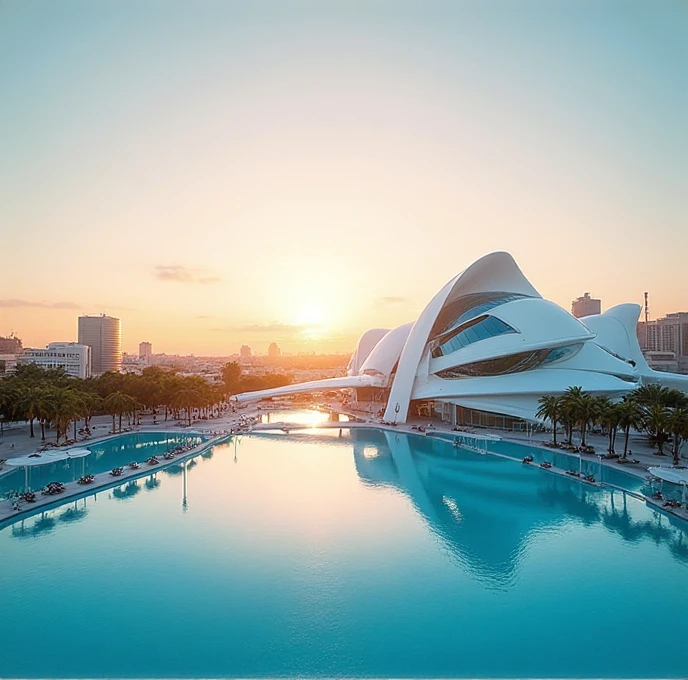
The City of Arts and Sciences (Ciudad de las Artes y las Ciencias) is one of the most futuristic architectural complexes in Europe. Located in Valencia, it looks like something out of a sci-fi movie—sleek white buildings, massive blue pools, curved structures, and modern bridges combine to create a breathtaking space that feels ahead of its time.
Designed by architects Santiago Calatrava and Félix Candela, this cultural and scientific park is a masterpiece of innovation. It brings together a science museum, Europe’s largest aquarium, an opera house, a 3D cinema, a landscaped garden, and futuristic bridges—making it one of Spain’s most visited attractions.
This complete 2025 travel guide explores everything you need to know: attractions, history, architecture, tickets, timings, photography spots, nearby locations, and expert travel tips.
1. Introduction – Why This Place Is So Famous
People from all over the world visit the City of Arts and Sciences because:
-
It is one of Europe's most unique architectural sites
-
It looks futuristic and unreal—perfect for photos
-
It hosts the largest aquarium in Europe
-
The science museum is extremely interactive and educational
-
It’s ideal for families, couples, students, and solo travelers
-
Many Hollywood movies were filmed here
-
It’s surrounded by peaceful turquoise pools and gardens
Even if you’re not into science or architecture, this place will leave you amazed.
2. History of the City of Arts and Sciences
2.1 Beginnings
The project was proposed in the late 1980s as a way to modernize Valencia.
2.2 Construction Timeline
-
Started: 1990s
-
First building opened: 1998
-
Major expansions completed: 2005
2.3 Vision
Architect Santiago Calatrava envisioned a cultural space where science, art, and nature blend seamlessly.
2.4 Today
It is now a symbol of Valencia and one of Spain’s top urban attractions.
3. Main Attractions – What to See Inside
The complex includes seven major buildings, each with a unique purpose.
Let’s explore them one by one.
4. L’Hemisfèric – The Giant Eye-Shaped Cinema
The Hemisfèric is one of the most iconic structures.
Designed like a human eye, it symbolizes the “eye of knowledge.”
What’s Inside:
-
IMAX cinema
-
3D digital projection theater
-
Planetarium
You can watch science shows, space documentaries, underwater films, and more.
Why It’s Famous:
-
Its reflection pool creates the illusion of a complete eye
-
Perfect for futuristic photography
-
Beautiful at sunset when lights illuminate the building
5. Museu de les Ciències – Interactive Science Museum
This is one of Europe’s most interactive and family-friendly museums.
Highlights Inside:
-
Space exploration exhibits
-
Human biology displays
-
Robotics and technology zones
-
Hands-on experiments
-
Educational games for kids
-
Planet Earth and climate change galleries
This is not a boring museum—you can touch things, test ideas, and learn through play.
6. L’Oceanogràfic – Europe’s Largest Aquarium
Oceanogràfic is the biggest aquarium in Europe and one of Valencia’s top attractions.
It Contains:
-
Over 45,000 marine creatures
-
500+ species from all major ecosystems
-
A giant dolphinarium
-
Shark tunnels
-
Mediterranean, Arctic, Antarctic, and tropical habitats
-
Beautiful underwater walkways
Must-See Sections:
-
Beluga whales
-
Penguins
-
Sharks
-
Sea lions
-
Giant turtles
This is a paradise for animal lovers.
7. Palau de les Arts Reina Sofía – The Opera House
This futuristic building looks like a spaceship.
What Happens Here:
-
Operas
-
Ballets
-
Concerts
-
Theater shows
Its architecture is extraordinary both inside and out.
8. Umbracle – Garden & Viewpoint
Umbracle is a long open-air garden filled with:
-
Exotic plants
-
Palm trees
-
Flowers
-
Walking paths
-
Modern sculptures
Best Part:
There is a rooftop viewpoint offering stunning panorama of the entire complex.
Perfect for morning walks and sunset views.
9. El Assut de l’Or Bridge
A futuristic white cable-stayed bridge designed by Calatrava.
Its tall arch creates a dramatic skyline.
Great spot for wide-angle photography.
10. Agora Building
A large indoor multipurpose space used for:
-
Events
-
Exhibitions
-
Sports competitions
Its exterior has a sharp, sleek, metallic form.
11. Architecture – Futurism in Its Purest Form
The entire complex uses:
-
Calatrava’s signature curved white structures
-
Reflective blue pools
-
Enormous glass panels
-
Organic shapes
-
Symmetrical lines
-
Light and shadow play
Everything is designed to look futuristic, clean, and elegant.
It is one of the most photographed modern architectural sites in the world.
12. Ticket Prices & Timings (2025 Guide)
🎟 Ticket Prices:
-
Oceanogràfic: €25–€37
-
Science Museum: €8–€12
-
Hemisfèric: €8
-
Combined tickets available (recommended)
⏰ Opening Hours:
Varies by building but generally:
-
10:00 AM – 7:00 PM (winter)
-
10:00 AM – 9:00 PM (summer)
💡 Pro Tip:
Buy combo tickets to save money and reduce queue time.
13. Best Time to Visit
✔ Weather-Friendly Months:
-
April – June
-
September – October
✔ Best time of day:
-
Evening for photography
-
Morning for fewer crowds
At sunset, the buildings glow beautifully and reflect in the water.
14. Photography Guide – Best Spots
📸 Top Photo Locations:
-
In front of L’Hemisfèric
-
Reflection pools around the complex
-
Under Umbracle palm arches
-
Bridges overlooking turquoise water
-
From the Opera House walkway
-
Night shots (everything glows!)
Use a wide-angle lens for futuristic compositions.
15. Movies and Shows Filmed Here
Its sci-fi look has made it a popular filming location:
-
Doctor Who
-
Westworld
-
Tomorrowland
-
Multiple fashion shoots
-
Music videos
16. Nearby Attractions in Valencia
After visiting the City of Arts and Sciences, explore:
-
Turia Gardens
-
Valencia Cathedral
-
Central Market
-
Malvarrosa Beach
-
Bioparc Valencia
-
Valencia Old Town
17. Tips for Visitors (2025)
-
Bring water—Valencia gets warm
-
Wear comfortable walking shoes
-
Buy online tickets to avoid waiting
-
Visit morning for indoor areas
-
Visit sunset for photography
-
Use public transport (parking gets crowded)
-
Oceanogràfic requires 2–3 hours minimum
18. Why You Must Visit the City of Arts and Sciences
Because it offers:
-
Futuristic architecture
-
Family-friendly attractions
-
Educational fun
-
Beautiful walkways and pools
-
Valencia’s most famous photo spots
-
A once-in-a-lifetime experience
It is a place where science, art, nature, and imagination come together.
19. Conclusion – A Journey Into the Future
The City of Arts and Sciences is not just a tourist attraction—it’s a modern masterpiece. Whether you're walking beside the blue pools, exploring the science museum, watching marine life, or photographing the futuristic buildings, the experience feels magical.
It represents the innovative spirit of Spain and stands as one of the most extraordinary architectural achievements in the world.
A must-visit place for every traveler in 2025!


💬 Comments
No comments yet.