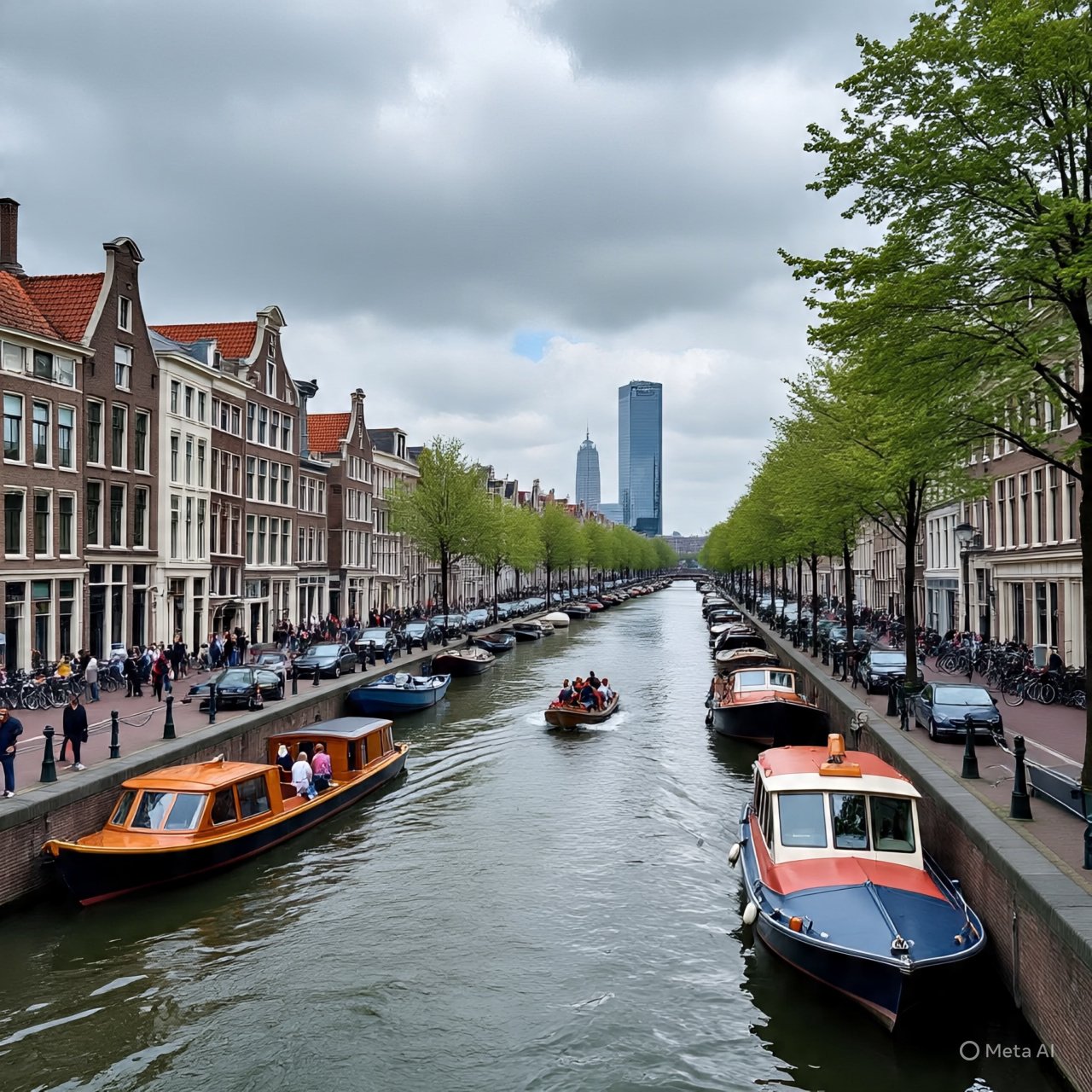
Amsterdam is a city that captures the imagination of travelers from around the world. Known for its canals bicycles and cultural treasures it offers an atmosphere that is both historic and modern. The city is a hub of art commerce and innovation yet it retains the charm of a small town with narrow streets and cozy cafés.
The Dutch capital is often described as a place of freedom and creativity. Its history stretches back to the twelfth century when it began as a fishing village. Over time it grew into one of Europe’s most important trading centers during the Dutch Golden Age. Today Amsterdam is a city of contrasts where seventeenth century houses stand beside modern museums and where traditional markets coexist with cutting edge design.
This article explores Amsterdam in depth. We will journey through its history architecture culture cuisine and modern life. We will also look at day trips travel tips and the reasons why Amsterdam continues to inspire millions of visitors each year.
Historical Foundations
Amsterdam’s story begins in the twelfth century when fishermen settled along the Amstel River. The name Amsterdam comes from the dam built on the river. By the thirteenth century the town had grown into a small trading center.
The real transformation came in the seventeenth century known as the Dutch Golden Age. Amsterdam became one of the wealthiest cities in the world. Merchants traded goods from Asia Africa and the Americas. The Dutch East India Company headquartered in Amsterdam was the first multinational corporation. Wealth from trade funded art science and architecture.
Amsterdam also became a center of tolerance. Refugees from across Europe found safety here. Jews fleeing persecution settled in the city and contributed to its culture and economy. This spirit of openness shaped Amsterdam’s identity.
The eighteenth and nineteenth centuries brought challenges. Wars and economic decline reduced the city’s power. Yet Amsterdam remained important as a cultural and financial center. In the twentieth century it faced occupation during the Second World War. The story of Anne Frank symbolizes the resilience of its people. After the war Amsterdam rebuilt and grew into the modern capital we know today.
Architectural Marvels
Amsterdam’s architecture reflects its history. The canal belt known as the Grachtengordel is a UNESCO World Heritage Site. Built in the seventeenth century it features elegant houses with narrow facades and ornate gables. These houses were designed to show wealth and creativity.
The Royal Palace on Dam Square is another highlight. Originally built as a city hall in the seventeenth century it later became a royal residence. Its grandeur reflects the power of Amsterdam during the Golden Age.
Religious architecture includes the Oude Kerk the oldest building in the city and the Westerkerk with its iconic tower. Modern landmarks include the Eye Film Museum and the Nemo Science Museum both showcasing innovative design.
Amsterdam’s bridges and canals create a unique landscape. With more than one hundred kilometers of canals and over fifteen hundred bridges the city is often called the Venice of the North.
Cultural Heritage
Amsterdam is a city of art and culture. The Rijksmuseum houses masterpieces by Rembrandt Vermeer and other Dutch painters. The Van Gogh Museum celebrates the life and work of one of the world’s most famous artists. The Stedelijk Museum focuses on modern and contemporary art.
Music and theater thrive in Amsterdam. The Concertgebouw is one of the world’s finest concert halls. The city hosts festivals celebrating jazz electronic music film and literature.
Amsterdam is also known for its spirit of freedom. The Red Light District and coffee shops reflect its liberal policies. Yet the city balances openness with respect for tradition.
Modern Amsterdam
Today Amsterdam is a vibrant metropolis with a diverse population. It is home to international companies universities and cultural institutions. The city embraces sustainability with bike friendly streets and green initiatives.
Neighborhoods such as Jordaan and De Pijp offer lively atmospheres with cafés boutiques and markets. The multicultural character of Amsterdam is reflected in its food music and art.
Tourism plays a major role in the economy. Millions of visitors come each year to explore its canals museums and nightlife. Despite challenges of overcrowding Amsterdam continues to welcome travelers with warmth.
Cuisine and Traditions
Food in Amsterdam reflects Dutch traditions and international influences. Stroopwafels herring and cheese are iconic. Markets such as Albert Cuypmarkt offer fresh produce and street food.
Indonesian cuisine is popular due to historical connections. The rijsttafel a feast of small dishes is a must try. Modern restaurants blend Dutch flavors with global creativity.
Traditions include King’s Day celebrated with music markets and orange clothing. Sinterklaas in December brings festive joy. Amsterdam’s cultural calendar is filled with events that connect past and present.
Day Trips and Surroundings
Amsterdam’s location makes it ideal for exploring nearby attractions. Zaanse Schans offers windmills and traditional crafts. Haarlem provides historic charm and art. The tulip fields of Keukenhof bloom in spring with vibrant colors.
Other trips include Utrecht with its medieval towers and The Hague with its political significance. The Dutch countryside with its dikes and farms offers peaceful escapes.
Travel Guide
The best time to visit Amsterdam is spring or summer. Tulips bloom in spring and festivals fill the city with energy. Summer offers long days and outdoor events. Autumn and winter provide quieter experiences with cozy cafés and museums.
Transportation is easy. Trams buses and trains connect the city. Cycling is the most popular way to explore. Visitors can rent bikes and join locals on scenic routes.
Accommodation ranges from budget hostels to luxury hotels. Travelers can choose based on their preferences. Amsterdam offers something for everyone.
Conclusion
Amsterdam is more than a capital city. It is a place where history creativity and freedom meet. From its canals to its museums from its traditions to its modern life Amsterdam inspires visitors with its charm and energy.
The Cultural Capital of the Netherlands continues to attract millions with its unique blend of past and future. Amsterdam is not only a destination but also an experience that stays in the heart.


💬 Comments
No comments yet.